 BrainAbout
Workplace
Published 2026-07-15
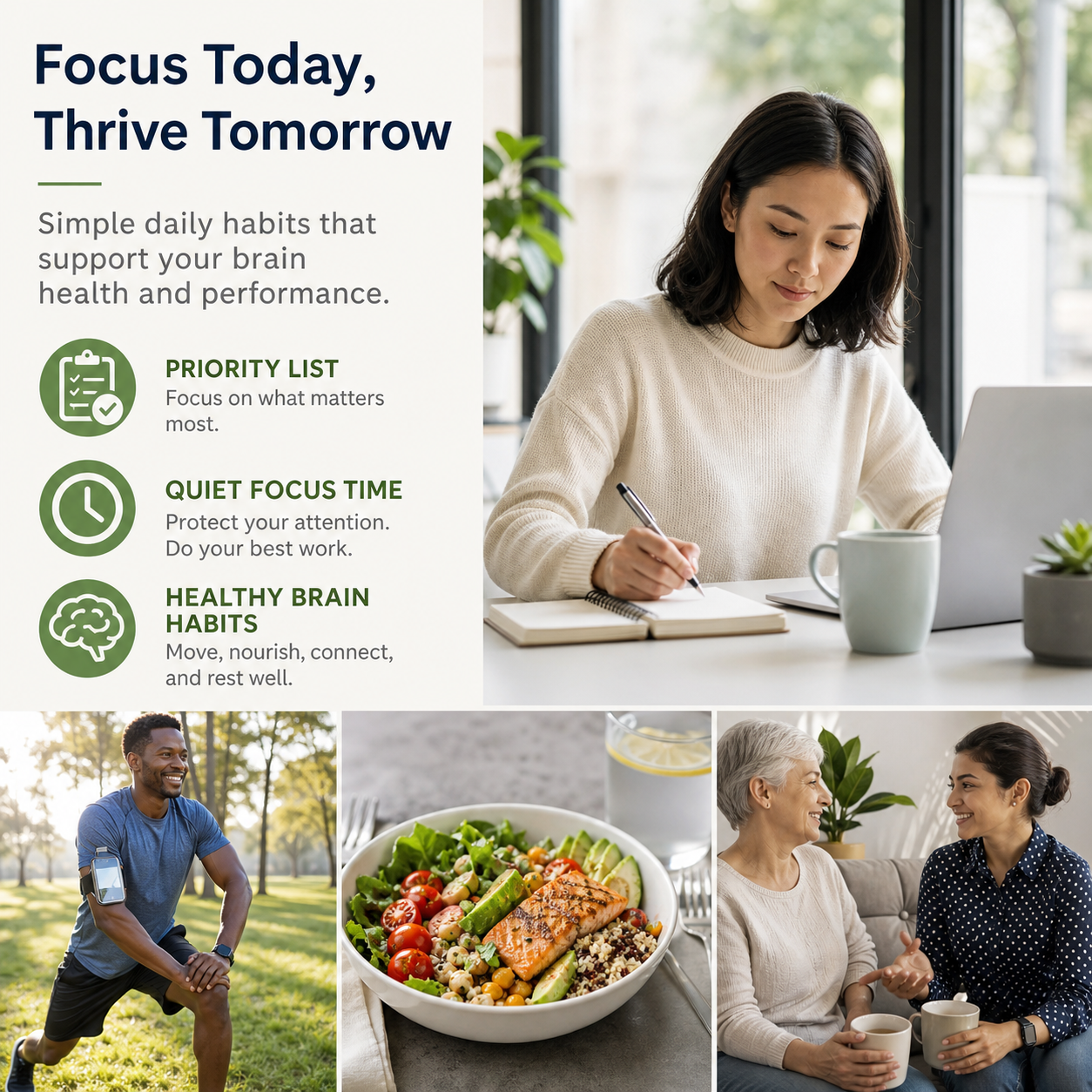
This workplace attention management for knowledge workers answers a common search question without reducing cognition to a single trick. workplace attention management is best approached as a set of skills and conditions: attention, learning, sleep, movement, social connection, stress, environment, and the tools used to organize daily life. The goal for professionals managing messages, meetings, and deep work is a routine that can be repeated, observed, and adjusted.
Direct answer
There is no universal shortcut that guarantees stronger memory or focus. A more useful approach combines meaningful activity, regular movement, adequate sleep, reduced distraction, and a system for recording what matters. Research can inform these choices, yet an individual result depends on health, prior experience, time, and the task itself.
Start with a baseline
Describe the real situation before changing it. What task feels difficult? When does it happen? What time of day, workload, sleep pattern, food, noise, or device use seems to matter? Keep a short log for a week. The point is not to judge the result. It is to notice which conditions support good work and which ones create friction.
Build a small experiment
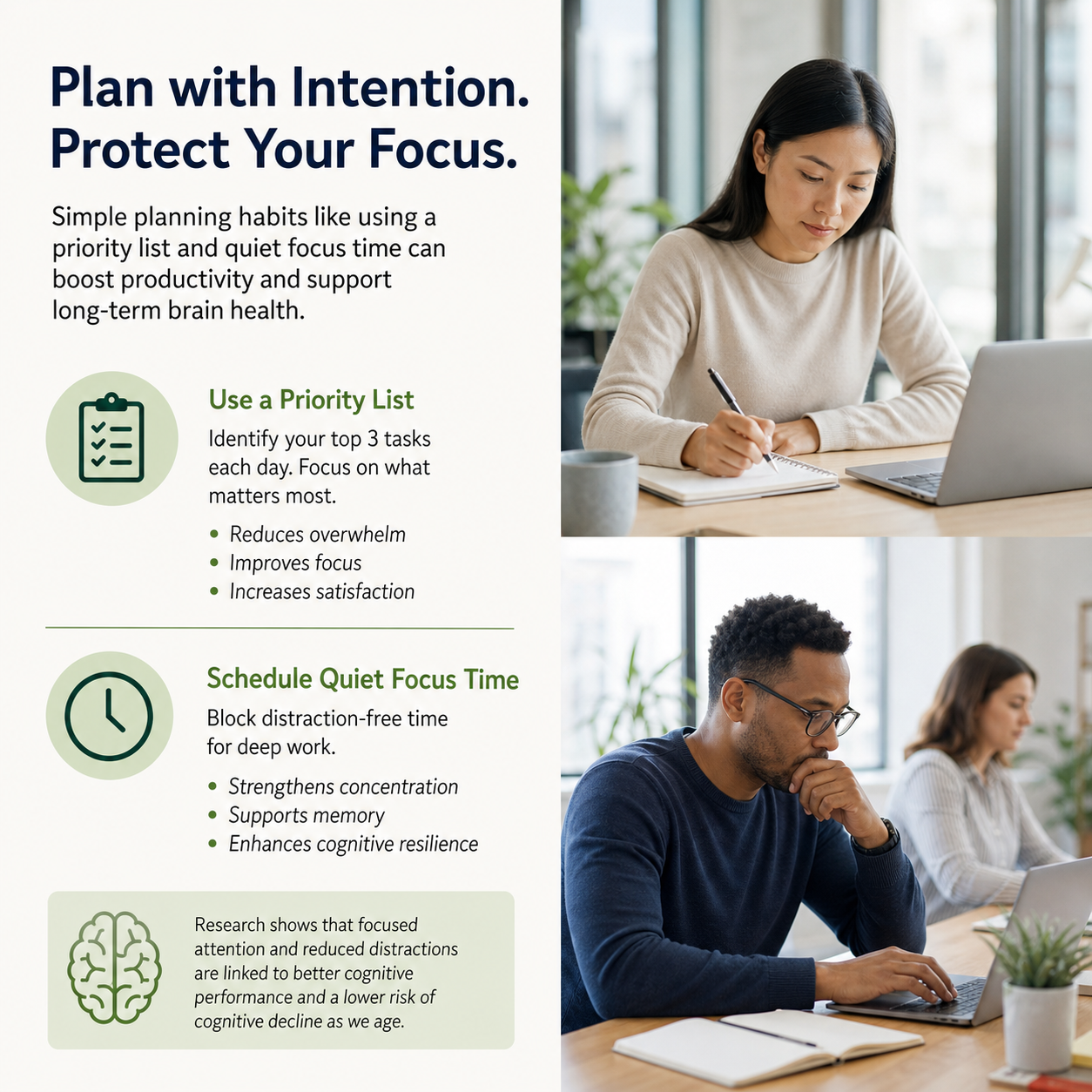
Choose one change that fits the week: use a paper plan for priorities, place the phone outside reach during a focused block, take a walk, review notes across several days, or schedule a brief check-in with another person. Define the action, the time, and the sign that tells you whether it helped. Keep the experiment modest enough that it can survive a busy day.
What evidence can and cannot say
Evidence is strongest when a recommendation names the population, the activity, the comparison, and the outcome measured. A result from a structured study does not make every commercial tool or daily habit a treatment. Be cautious with claims that promise to prevent disease, permanently raise intelligence, or transform every area of life. Look for a clear method, relevant outcome measures, independent evidence, and limits stated in plain language.
Questions readers ask
How long should a routine last before review? Give a realistic practice enough time to become familiar, while checking whether it fits your day. Is a difficult puzzle enough? It can be enjoyable mental activity, but it is not proof of broad cognitive change. What if the concern feels new or serious? Seek professional advice rather than relying on a lifestyle article.
Health boundary
This article discusses general education and everyday habits. It does not diagnose a memory problem, attention condition, sleep disorder, or cognitive impairment, and it does not replace advice from a licensed clinician. A sudden change in memory, thinking, speech, balance, mood, or daily functioning deserves timely professional guidance. People taking medicines, managing chronic conditions, or considering a major exercise change should discuss personal questions with an appropriate clinician.
Turn information into a reviewable plan
Choose a weekly moment to look back at the routine. Note what was easy to repeat, what created friction, and whether the change supported the original goal. Use observations that matter in everyday life: fewer missed appointments, a calmer study session, better ability to return to a task, or more confidence organizing a project. This approach avoids treating a single score as the whole story.
Protect the foundations
No digital tool, game, book, or productivity method can replace the broader conditions that support health. Make room for sleep, movement, relationships, medical care, and time away from constant demands. When choosing between two new habits, favor the one that fits these foundations rather than competing with them. The strongest plan is one a person can keep without turning ordinary life into a permanent experiment.
Share the useful details
A partner, teacher, manager, friend, or clinician may help make a plan more realistic. Share the goal, the support that would help, and the signs that indicate the plan needs revision. Clear communication keeps cognitive health work grounded in real life and reduces the temptation to chase exaggerated claims.
Fit the plan to the life stage
For students, short review cycles, practice retrieval, breaks, and an environment that limits interruptions may be more useful than marathon study sessions. For professionals, protect a small number of priority tasks, group low-value messages, and use recovery time between intense demands. For older adults, combine enjoyable learning, movement, social participation, and routine health conversations rather than treating any game or app as a medical intervention.
Keep the target humane
A useful plan supports learning, work, independence, or enjoyment. It does not demand constant productivity. Include food, sleep, movement, relationships, and unstructured time in the schedule. When a routine stops helping, identify the pressure point and simplify it. Sustainable cognitive care is often quieter than a dramatic challenge and more likely to remain in place.
General educational information only; not diagnosis, treatment, or emergency guidance.